School: General Information and Academic Administration
Knowing the school's General Information and Academic Administration is crucial for seamless integration, adherence to policies, access to resources, effective communication, conflict resolution, strategic planning, quality assurance, financial matters, and support services. It ensures a smooth academic experience for students, faculty, and contributes to the overall success of the institution.
![IMG20231030132108[1].jpg](https://static.wixstatic.com/media/ff56ce_aa1cb3acd06b482d8ade95c1b680bbd8~mv2.jpg/v1/fill/w_327,h_245,al_c,q_80,usm_0.66_1.00_0.01,enc_avif,quality_auto/ff56ce_aa1cb3acd06b482d8ade95c1b680bbd8~mv2.jpg)
sCHOOL PROFILE
Explore the rich tapestry of Puhua School's journey, delve into its intricate History, intricately crafted Profile, and discover the guiding beacons of its Vision, Mission, and Purpose in this comprehensive section. Uncover the essence and aspirations that have shaped the institution, providing a holistic understanding of its educational ethos and commitment to excellence.
01
BRIEF HISTORY
"If we think one year ahead, sow seeds. If we think ten years from now, plant a tree. But if we think about the next hundred years, educate the people."
(Kuan-zi)
In line with Kuan-zi's perspective, education is viewed as an honorable and essential endeavor. Prof. Dr. Nicolaus Driyarkara, an Indonesian religious figure and educator, emphasized that education is the means by which humanity imparts values to the young, fostering complete and cultured individuals. Parents bear the primary responsibility for this, as the family provides the initial environment for a child's life, development, and play. Seeking assistance from schools, parents contribute to the education of their children for the benefit of future generations.
Pu Hua School, also known as Sekolah Nasional 3 Bahasa Putera Harapan, has a history marked by a Chinese immigrant named Tan Swie Sing, who settled in Purwokerto in 1850. Tan's sincere dedication to teaching Chinese language led to the establishment of "SEKOLAH TIONG HOA HWEE KWAN" in 1906, laying the foundation for Putera Harapan School. Over the years, Pu Hua faced challenges, including government restrictions in the late 1950s and closure in 1966. Despite adversity, Mandarin teaching continued covertly, with students joining forces for private classes.
The resilience of Pu Hua manifested in reunions, such as the 1988 alumni gathering, and the establishment of the Putera Harapan Purwokerto Foundation in 1997. The school's development continued with initiatives like the construction of the foundation building in 2000 and the introduction of a Mandarin language course in 2001. Pu Hua's commitment to education culminated in the laying of the foundation stone for the Putera Harapan National Trilingual School on April 30, 2006.
From its inception, Pu Hua School has been a pioneering national school with trilingual instruction, fostering not only academic knowledge but also character development. With the motto "diligent, sincere, modest, diligent," Pu Hua aspires to be a renowned institution, producing high-quality students for the benefit of the wider community.
02
VISION
Nurturing future leaders for a better life and better communities.
03
MISSION
-
To be a learning community dedicated to innovation, creative activity, character development, excellence in teaching and learning, as well as the best service.
-
Committed to a trilingual education in Indonesian, Chinese and English aiming to cultivate trilingual talents with an international perspective.
Academic Support System
ORGANIZATIONAL STRUCTURE

LEVELS OF EDUCATION
PUHUA SCHOOL encompasses educational tiers beginning with KB-TK (Early Years), followed by SD (Primary), SMP (Lower Secondary), and concluding with SMA (Upper Secondary).


SCHOLARSHIP OPPORTUNITIES
Scholarships are available for students with outstanding academic and non-academic accomplishments, including achievements in arts and sports at the national or international level. These scholarships are officially sanctioned by state institutions and are granted in accordance with the terms and conditions stipulated in the Decree of the Putera Harapan Banyumas Foundation regarding PPDB scholarships.
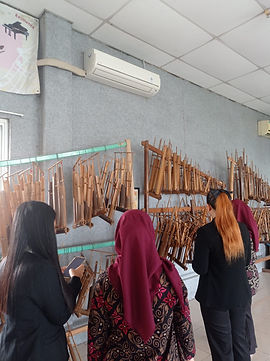
PUHUA as TRILINGUAL and MULTICULTURAL SCHOOL
Committed to trilingual education, Puhua School employs a curriculum designed for proficiency in three languages: Indonesian, Mandarin, and English. It embraces students from diverse backgrounds, transcending ethnic and religious distinctions, earning its designation as a multicultural school.


Puhua having Mixed Curriculum
Puhua School, affiliated with Hebei University in China, excels in offering a Mandarin curriculum accessible to all ages, earning recognition as one of 16 institutions authorized to conduct official Mandarin exams globally. Additionally, as a Pearson Center (#94437), it integrates Pearson's curriculum for English, Math, Science, and Computing, while also serving as the official organizer of International GCSE and International A-Level exams. Puhua School, the first and only accredited international standard school in Purwokerto, maintains a comprehensive local content curriculum, including Indonesian, Religion, and Citizenship Education, tailored to students' diverse religious affiliations.
TEACHING SYSTEM
Integration of distance learning sites (LMS) during face-to-face setting
Some classes continue to utilize the Learning Management System (LMS) they registered for during the pandemic. This is aimed at optimizing learning, allowing students to engage in activities and seatwork related to their subjects even when their primary teacher is not physically present. Another objective is to familiarize students with the flexibility of studying anytime and anywhere. Through the LMS, they can access their e-books, review past activities, and revisit lessons by simply logging in using their phones.
![IMG20231027073819[1].jpg](https://static.wixstatic.com/media/ff56ce_86c4612e42444174885d3bb18538dd4e~mv2.jpg/v1/fill/w_315,h_236,al_c,q_80,usm_0.66_1.00_0.01,enc_avif,quality_auto/IMG20231027073819%5B1%5D.jpg)
![IMG20231027073814[1].jpg](https://static.wixstatic.com/media/ff56ce_128596d1fba241cdb1dcde72b73bb9ae~mv2.jpg/v1/fill/w_315,h_236,al_c,q_80,usm_0.66_1.00_0.01,enc_avif,quality_auto/IMG20231027073814%5B1%5D.jpg)
Utilization of reading, writing, speaking, and listening (ebooks) activities / ways of teaching
Classroom learning sessions encompass a variety of teaching methods, with a notable emphasis on honing students' skills in reading, writing, speaking, and listening. Each core skill is addressed through thoughtfully curated activities. For instance reading sessions involve chorus recitations, while in writing, students are tasked with completing all assigned activities. Speaking skills are honed through individual recitations, and listening skills are developed through numerous activities in the curriculum and during these listening activities, the instructor plays audio recordings from the ebook, incorporating lesson content or activities that require student engagement.

Materials and other learning resources
Technologies implemented during classroom discussion
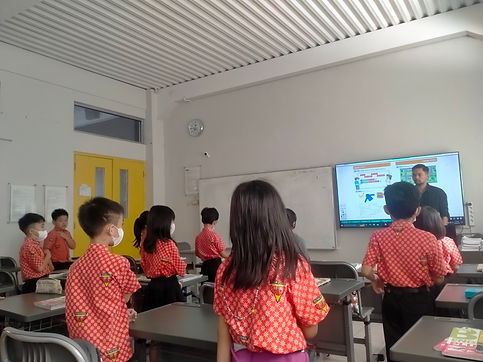
Each teacher is encouraged to bring a laptop to all their classroom sessions to make the most of learning opportunities. The straightforward approach to integrating technology in every class involves the teacher connecting their laptop to the classroom's television. The process is as simple as connecting to the school's Wi-Fi using the provided username and password. Once connected, the teacher can present either the activity book or learners book from the curriculum on their laptop.
Both books, the activity book, and the learners book offer a variety of learning guides. Notably, the listening components represent a technological innovation. Students can engage with discussions or activities that enhance their listening and comprehension skills.
Availability of materials in school library
All the materials available in the library, including books, are accessible to students. However, for technological items like text-to-speech books, the supervision of a school librarian is required.
A school librarian is always on hand, ensuring that students entering or leaving the library are never without supervision. The library is not limited to the books used within the classrooms; it houses a diverse collection covering a wide array of topics in the three major languages spoken at the school: English, Bahasa, and Chinese.


Student’s Book and Activity Book (Primary)
In primary school, the English subject relies on two types of books: the learners book and the activity book. The learners book focuses more on discussions, collaborative activities, and peer engagement, encouraging group activities and recitations. On the other hand, the activity book is centered around individual tasks, seatwork, and objective-type questionnaires. Despite these differences, both books share a common feature—they both include listening activities, with recordings played by the teacher.
Furthermore, a notable feature in their books is the sticker-sticking activity. For instance, there's an activity where students analyze and follow instructions related to the locations of establishments. Following the given details, students then adhere to the instructions and affix the establishments accordingly.
Student’s Book, Activity Book, and Teacher’s Book (Secondary)
Regarding the secondary-level books, they incorporate a more restrained visual design. While colors are used, pictures do not play a prominent role. The layout is optimized, with content organized in a two-column format within a page, ensuring efficient use of space. The student’s book includes lesson content and collaborative activities, similar to the primary level. Likewise, the Activity book focuses on individual activities and objective-type quizzes. Both books feature listening activities, where students engage with the audio provided in their curriculum.
The teacher’s book at the secondary level encompasses answer keys for all activities in both the student’s books.

PEDAGOGICAL CONTENTS
Gaining pedagogical content knowledge is crucial for teachers practicing in a specific school setting, as it enables them to align their teaching methods with the school's educational philosophy, facilitating effective communication with colleagues, maintaining consistency in teaching practices, adapting to the school's culture, and addressing the unique needs of students. This knowledge also contributes significantly to professional development, aids in building positive relationships, enhances classroom management, and demonstrates a strong commitment to the school's mission and goals. Moreover, by applying educational theories, best practices, and techniques, teachers with pedagogical content knowledge can effectively convey subject matter, ensuring engaging and impactful instruction.
Teaching methods of the teacher that you observed
Bilingual communication
The instructor initiates discourse in the English language initially, subsequently providing translations in Bahasa. In the context of communication between the instructor and students, the instructor employs English as the primary mode of expression. However, should students request responses in Bahasa, the instructor accommodates by initially responding in Bahasa and subsequently providing an English translation.
Time pressured activities
To use time efficiently and accomplish necessary tasks, certain activities following classroom discussions are timed. This approach encourages students to concentrate more, stay present-minded while responding, and provides motivation to complete tasks within the allotted time. Moreover, it serves as a challenge to enhance their time management and critical thinking skills.
One-on-one teaching with struggling students amidst classes
The class begins with a collective discussion involving the entire group. Following this, students individually tackle the assigned activity in their books. As students work on the tasks, the instructor circulates around the class, checking for any signs of struggle. If a student encounters difficulties, the teacher engages with them naturally, providing guidance similar to a tutoring session tailored to the specific challenges they are facing.
Providing hints of what the answer is without explicitly giving the exact one
The lesson being discussed revolves around animals. A visual representation of an animal is projected onto the screen. In instances where students may not be acquainted with the creature's name, the teacher proceeds to offer hints. These hints typically include information about the animal's habitat, its classification within the animal kingdom, and an attempt to articulate the initial syllable of its name.
![IMG20231023095757[1]](https://static.wixstatic.com/media/ff56ce_44f5c138c26048f7b65ef4e90ebdc660~mv2.jpg/v1/fill/w_250,h_187,al_c,q_90,enc_auto/ff56ce_44f5c138c26048f7b65ef4e90ebdc660~mv2.jpg) |  |  |  |
|---|---|---|---|
 |  |  |
Their learning materials and innovation
Use of online educational games
Students, being children, may occasionally be challenging to engage fully. To address this, some instructors incorporate online educational games like Blooket, Quizziz, and Kahoot. These platforms promote enjoyable and entertaining learning experiences. While they may seem like games, upon closer observation, a significant portion of these activities revolves around the actual lesson content.
Authentic assessment used by the teachers

01
Additional activity sheet prepared by the instructors
The books are loaded with activities and seatwork, yet some instructors go the extra mile by preparing additional pamphlets. This provides students with a diverse set of questions related to the lesson, especially when the lesson proper is not explicitly provided in the books.
02
Show and Tell for Speaking Test
The students were assigned a show-and-tell activity where they were required to illustrate something they enjoy. They were then instructed to share more details about their illustration in front of the class while holding it up for their peers to see. Many students had their scripts written on the back of their drawings, providing them with a reference in case they couldn't memorize the information.
Puhua Art Village - After School Activity
OTHERS
Puhua School offers a diverse range of after-school activities, including Public Speaking, Arts, and more. In my case, I was assigned to lead a session on Public Speaking PAV. Given the limited time available, I opted to demonstrate the art of delivering speeches in front of an audience by choosing the Philippines as the focal point of my talk.
SAFE BORDERS OF LUZON, PHILIPPINES: SIERRA MADRE MOUNTAIN RANGE

Puhua Art Village - Public Speaking Students of Primary

Puhua Art Village Class Discussion in Secondary Students

Puhua Art Village - Public Speaking Students of Primary

Puhua Art Village Class Discussion in Secondary Students

Puhua Art Village - Public Speaking Students of Secondary


Hands-on Discussion During PAV Activities

Puhua Art Village Class Discussion in Secondary Students

Puhua Art Village - Public Speaking Students of Primary
TEACHING PLAN
Teaching plan related to your major
Prior to our departure for Indonesia, I was assigned the role of being a buddy for the exchange SEA teachers who were also from my receiving university. This prompted me to familiarize myself with some basic Bahasa words and greetings. Although my grasp of the language was limited, I recognized the necessity of effective communication during my teaching stint at the cooperating school. To address this, I decided to keep Google Translator readily accessible at all times while inside the classroom, aiming to alleviate communication challenges. Additionally, I incorporated translations at the bottom of the English versions in my PowerPoint presentations. This way, if students found the English content challenging, they could refer to the Bahasa translation for better understanding.
Curriculum
Puhua School employs a tripartite curriculum approach, integrating three distinct sources: the National Curriculum (Kurnas), the Pearson Edexcel Curriculum from England, and the Mandarin Curriculum from Hebei University in China.

TEACHING PRACTICE
Procedures of teaching
Following the schedule set by the cooperating school, we were assigned to conduct our final demonstration teaching in three distinct levels: Primary, Lower Secondary, and Higher Secondary. Once the specific dates for the teaching sessions were confirmed, I commenced with the pre-teaching preparations in the Philippines. This involved creating lesson plans, sourcing relevant resources, and brainstorming creative methods to ensure an engaging and enjoyable learning experience.
During my initial demonstration teaching in the Primary level, I covered a lesson on various renowned large markets worldwide. This topic resonated with me personally as someone who enjoys shopping. Being an exchange student, I took the opportunity to share insights into my home country's ways and identity. Rather than solely focusing on the markets mentioned in the book, such as those in England, Japan, and Thailand, I incorporated the well-known Divisoria market in Manila, Philippines.
During my second demonstration teaching in the Upper Secondary level, I aimed to replicate a Philippine classroom setting while ensuring active participation in all lesson activities. After initiating an icebreaker activity that had students moving around, I seamlessly transitioned to the lesson proper, covering various topics within a single unit.
For my final demonstration teaching in the Lower Secondary level, my approach was deeply rooted in my Filipino upbringing, prioritizing family values. The lesson revolved around a father writing a letter to his son, who had left for education. I had the students read each stanza, followed by a detailed explanation to provide a solid foundation for comprehending and critically analyzing the subsequent activities with greater ease.
Concerning the time allocated from the day they provided my schedule to the actual demonstration, I had a substantial duration, enabling me to meticulously craft a comprehensive lesson plan. This plan became my reliable guide, eliminating the need for a scripted presentation.
However, managing classroom time proved to be a challenge, particularly waiting for students to complete the numerous activities in their books. Many of my cooperating teachers advised me to ensure the completion of all activities within the lesson proper. Additionally, they emphasized the importance of ensuring students not only finished the activities but also comprehended the process and outcomes of each task.
Time management and organizing activities
Classroom management
Maintaining classroom cleanliness is a non-issue, thanks to the students' conscientious efforts and the continuous presence of school janitors around the clock. Additionally, the habit of regular handwashing is well-practiced, facilitated by conveniently located washing areas spread throughout the school.
However, managing noise and addressing misbehavior required thoughtful strategies to capture their attention. It's crucial to acknowledge that, despite being in secondary school, these students are still children, and noise can be an inherent aspect of their interactions. As a non-native Indonesian speaker, I carefully discern whether the noise is academically oriented or disruptive. Academic noise, where students assist their peers in understanding concepts, is handled with care to avoid unnecessary interruptions.
For the disruptive noise, I introduced the "Waterfalls" method as a creative approach to prompt them to lower their voices. When the noise escalates, I announce "Waterfall," and the students respond by mimicking the soothing sound of water cascading down a waterfall. This cue encourages them to shush and maintain a quieter atmosphere after the simulated waterfall.
The issue I faced was something my advisers predicted before I left my home university, and it's the challenge of communicating due to language differences. To tackle this, I learned basic words and phrases in advance, allowing me to engage in casual conversations, greet people, and understand those around me.
To enhance my productivity during my stay, I always keep Google Translator on my cell phone handy. For my teaching demonstrations, I take extra steps by creating bilingual PowerPoint slides. Additionally, the night before each demo, I prepare potential questions and craft a Bahasa script so that if students inquire, I'll be ready with a response.
Problem-solving while teaching and staying in the designated school
SUMMARY AND SUGGESTIONS

Purposes of practicum (meets or not meets your need)
Teaching methods and skills in various countries differ based on preferences, needs, and backgrounds. This program effectively introduced us, as student teachers in training, to broaden our understanding of our existing knowledge and teaching techniques in our home country. It also helped us enhance these skills according to the specific requirements of the cooperating school.
Teaching in a different country has encouraged me, as an English teacher, to push my boundaries and discover new depths in speaking, listening, and understanding the English language. This experience has broadened my perspectives on the diverse cultures and identities of people from different backgrounds than mine.
As someone who is expected to learn something from Indonesia and share the knowledge that I have gained in the Philippines, I believe that I have met what I need to learn during the practicum; guaranteed that finding comfort on a foreign place was never easy, but no one said that you cannot build a home in a place you just got in. Education has been the common ground that connected me with the Indonesian people I've met.
Procedures of practicum
Similar to the Philippine Teaching Practice, the process for every teaching session doesn't just begin when you step into the class but days in advance. After crafting the lesson plan for the teaching demonstration, I have it reviewed and critiqued by my mentors for further refinement based on their insights.
On the day of the demo, I start by formally introducing myself, recognizing the children's natural curiosity about a new teacher. It's common and understandable for them to be a bit overwhelmed by having a foreign instructor, resulting in initial excitement, noise, and a barrage of questions. To regain their focus, I strategically address urgent questions about my identity and purpose, assuring them that other questions will be answered after the teaching demonstration.
Once their attention is back on me, I kick off with an icebreaker game. Following that, I briefly review their previous lesson and find connecting points to introduce the new topic. Throughout the lesson, I guide them through answering activities in their books, ensuring no task is left unanswered. At the end of the lesson, I incorporate information about my home country, tying it to the lesson for a cultural immersion experience in every class.
After concluding the lesson, I provide a concise summary of the day's topics and ask for student feedback. If time permits, I address any remaining questions, whether about me as an international student or clarifications about the lesson.

Outcomes of practicum
Students express their uniqueness in various ways, resulting in diverse reactions after each teaching demonstration. One of my favorite responses is when they actively ask questions or initiate conversations. It brings me joy to see their effort in communicating in English. Some students bring friends as translators, while others speak in unison, eager for a collective interaction.
Regarding the feedback from my mentors, I find great satisfaction in it. Every mistake I make becomes an opportunity for improvement, paving the way for me to evolve into a better educator.
Overall Impression
With all of the chances that I was asked to speak about my insights and feedback towards the program, I repeatedly said that I could not think of any other way to have this program successfully finished. This opportunity gave me an insight of how the world is a beautiful, safe, and great place because of education; it made me love this profession more. My skills were honed, my confidence got into a whole new level, and my limits were greatly challenged and discovered.
It is because of this program that I get to have more knowledge and stories to tell people; I will be a living testimony of how this kind of program enriches an individual to become the best version of themselves.

Suggestions for future improvement

As someone who enjoyed this program so much, I still see things that can be improved so that the next students who will get to participate will be happy just like me. First is that to have this program longer, one month may be enough to learn something but longer than a month can give an individual a wide range of knowledge. For example, with a longer program, students can delve deeper into cultural immersion, gain a more profound understanding of the educational system, and establish stronger connections with the community.
It is essential to inform students about their schedule of activities before their departure date from their home country. This proactive approach allows students to make the most of their preparations by ensuring they have all necessary items for each scheduled activity. For instance, if students know in advance that there will be outdoor activities, they can pack appropriate clothing and essentials accordingly.
Teacher Julia, Sea Teacher